
Mobility Scooter Repair or Replacement? A Buford Owner's Decision Guide
Mobility Plus Buford
08/26/2026
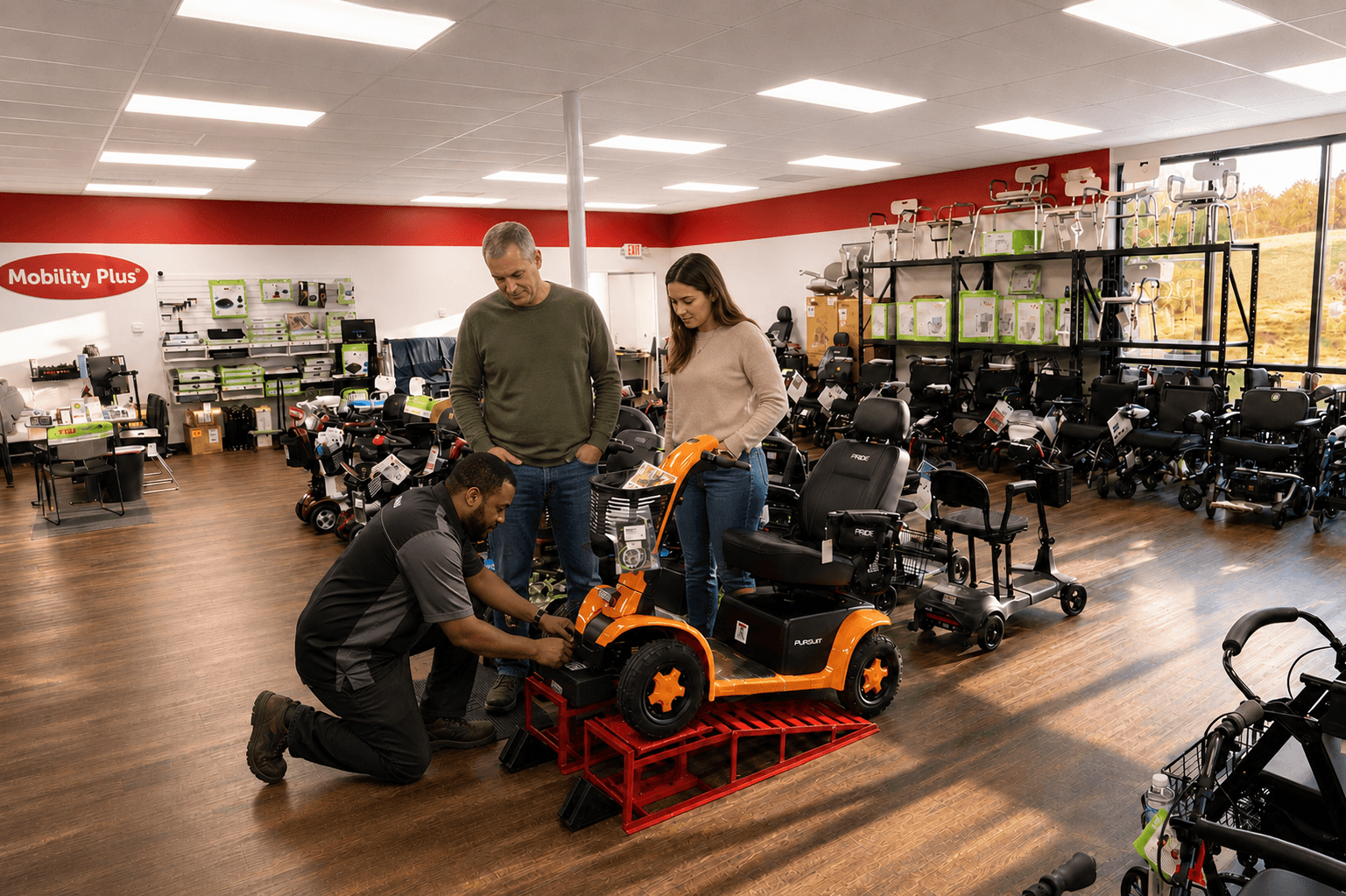
When a mobility scooter stops holding a charge, shuts down unexpectedly, or simply no longer feels dependable, the first question is often whether it is worth repairing. The answer should not be based on age alone. A careful assessment can separate an isolated service issue from a pattern that makes replacement the more practical choice.
Start with a diagnosis - not a guess based on age
An older scooter is not automatically ready for replacement, and a newer scooter is not automatically economical to repair. The useful question is whether a qualified assessment can identify a specific cause and whether correcting it will restore safe, reliable use. Ask the technician to explain the failed component, any related wear, parts availability, labor, expected turnaround, and what the scooter should be able to do after the work. That turns a stressful decision into a comparison you can document.
Repair usually makes sense when the problem is common and isolated
Battery, charger, tire, wheel, seat, armrest, key switch, wiring-connection, or routine wear issues may be repairable without replacing the complete scooter. Symptoms alone do not identify the cause. A battery gauge that drops, for example, can point to a battery or charging issue, but load, tire condition, connectors, and other components can contribute. Bring the approved charger and describe exactly when the problem appears so the complete system can be considered.
The frame, steering, brakes, and controls are still safe and supported
A repair is easier to justify when the scooter's core structure is sound, steering and braking can be restored to the manufacturer's specifications, and the model still has appropriate service information and compatible parts. Ask whether the proposed part is manufacturer-approved or otherwise confirmed for the exact model. Do not accept a plug, connector, or physical fit as proof of electrical compatibility.
The repair can restore dependable use at a reasonable total cost
Compare the written repair estimate with more than the sticker price of another scooter. Include diagnostic and labor charges, parts, pickup or in-home travel fees, warranty coverage, delivery, setup, and likely near-term maintenance. Also compare the cost of downtime. A modest repair that returns a well-fitting scooter to dependable service can be the better value; a large estimate on a model with other worn systems may not be.
Replacement is worth discussing when safety-critical damage is present
Cracks or deformation in structural areas, severe corrosion, fire or liquid damage, repeated electrical overheating, or control problems that prevent predictable starting, stopping, or steering require qualified evaluation. Stop using equipment that cannot be operated safely. Do not open battery cases, bypass interlocks, splice charger wiring, or keep cycling the power to force movement. Follow the exact owner manual and contact the provider or manufacturer for safe handling and transport instructions.
Repeated failures and downtime are disrupting daily life
One repair does not necessarily signal the end of a scooter. A pattern matters more: multiple breakdowns, recurring faults after prior repairs, long parts delays, or several aging systems needing work at the same time. Write down the dates, symptoms, completed repairs, and total spending from the previous year. A simple service-history timeline helps reveal whether another repair is likely to buy reliable use or only postpone the next interruption
Parts are obsolete, unavailable, or cannot be verified for the model
A scooter can be mechanically repairable in theory but impractical in the real world if essential parts are discontinued or cannot be sourced safely. Ask whether the part is currently available, the estimated arrival date, the warranty on the part and labor, and what happens if additional damage is found after disassembly. Mobility Plus Buford says it may repair equipment purchased elsewhere when parts can be sourced, so bring the brand, model, and serial number before the visit.
The scooter no longer fits the rider, vehicle, or environment
Even a successful repair may not solve a mismatch. Consider seat comfort and support, safe transfer height, control reach, turning space, doorway width, terrain, travel distance, storage, charging location, vehicle lifting limits, and whether the scooter can be transported. These are functional equipment questions, not medical advice. If the user's abilities or needs have changed, involve an appropriate clinician or mobility specialist before selecting a different device.
Use a written repair-versus-replacement comparison
For the repair column, list the assessment, parts, labor, pickup or travel fees, turnaround, warranty, and any other worn items likely to need attention soon. For the replacement column, list the equipment price, delivery and setup, accessories, warranty, vehicle or home-fit changes, and expected service support. Then score both options for safety, fit, reliability, downtime, parts support, and total near-term cost. The lowest immediate price is not always the lowest practical cost.
What to bring and ask before authorizing service
Bring the scooter key, approved charger, brand, model, serial number, owner manual if available, fault codes, and a short symptom history. Note the last full charge and whether the fault happens at startup, under load, on slopes, or after a certain distance. Ask for the assessment fee, labor rate, estimated parts and time, warranty, transportation options, and an approval threshold before extra work is performed. Keep a copy of the estimate and final invoice for the service history.
When to stop using the scooter and seek help
Stop using the scooter if it shuts down in a way that prevents safe control, steering or braking becomes unpredictable, a structural component is cracked, or you notice smoke, sparking, an unusual odor, leaking, swelling, burn damage, or unusual heat from a battery or charger. Move people away from an immediate hazard and contact emergency services when appropriate. Do not touch leaking material or place a damaged lithium battery in household trash or ordinary recycling.
Frequently Asked Questions
How much does a mobility scooter diagnosis cost in Buford?
The current Mobility Plus Buford service page lists a $30 initial assessment and says that amount is deducted when service proceeds. Call (770) 800-6681 to verify the current fee, what it covers, and whether pickup or in-home travel charges apply
Can Mobility Plus Buford repair a scooter purchased somewhere else?
The current service page says the store may repair equipment purchased elsewhere when the required parts can be sourced. Provide the brand, model, serial number, symptoms, and any prior repair history so parts availability can be checked.
Does Mobility Plus Buford offer free scooter battery checks?
The current service page states that free in-store battery checks are available with no appointment. Call before a special trip to confirm availability and bring the scooter's approved charger when practical.
Can Mobility Plus Buford pick up a heavy scooter for repair?
The current service page lists pickup and return of heavy equipment with trip fees by the distance. Verify the address, equipment type, current fee, availability, and any distance-based charge before scheduling.
Does an old battery mean I should replace the whole scooter?
No. Battery age alone does not decide whether a scooter should be replaced. A battery or charging-system repair may be appropriate if the scooter is otherwise safe, fits the user, has supported parts, and can be returned to dependable service.
Should I repair mobility scooter wiring myself?
Do not bypass safety systems, open sealed battery cases, or splice charger or scooter wiring without the exact manufacturer procedure and proper qualifications. Follow the owner manual and use a qualified mobility-equipment provider for diagnosis and repair.